How City Bakeries Change When Recipes Travel
City bakeries adapt recipes as people and ingredients move. Learn how migration, local flour, equipment, and neighborhood routines reshape familiar breads.
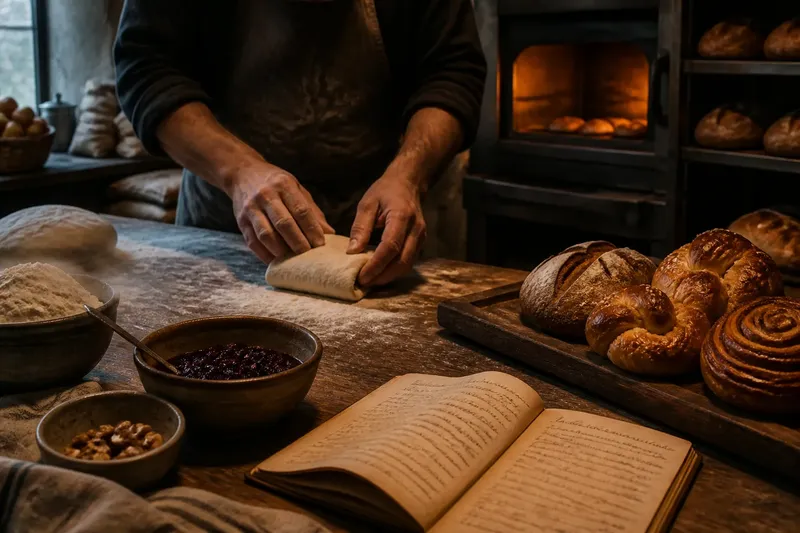
The most common mistake in tracing a city bakery is treating a familiar loaf as a recipe that arrived intact. That shortcut hides what changed when bakers, ingredients, tools, and customers met in a new place. A city bakery’s history is often written in those adjustments: a dough made workable with local flour, a filling shifted to match available fruit, or a baking schedule fitted around a neighborhood’s daily rhythms.
To understand how recipes travel, follow the decisions behind the counter rather than searching for a single origin story. Bakeries are working institutions, not display cases for untouched tradition. Their menus record movement, but so do their ovens, labor routines, customer habits, and relationships with nearby suppliers.
City bakery history begins with adaptation, not a pristine original
A recipe can move with a person, through family memory, apprenticeship, a written formula, or a bakery job. Once it reaches another city, its ingredients and working conditions may differ. Flour absorbs water in its own way; ovens distribute heat differently; familiar fruit or dairy may be scarce, seasonal, or costly. Bakers respond because the product has to work in the place where it is being made.
That response does not make a local version less authentic. Authenticity is often treated as a fixed list of ingredients, but food traditions also include techniques and judgments: how dough should feel, how dark a crust should become, or which texture customers expect. Those choices can persist even when the materials change.
Imagine a baker who learned to make a soft, enriched roll in a port city and later opens a small shop inland. The local flour makes the dough feel firmer, so the baker adjusts hydration and kneading rather than abandoning the roll. Customers still recognize its tender crumb, while the loaf carries the practical imprint of its new home. The change is visible in the work, not just in a story told about the recipe.
Ingredient changes leave clues in the finished bake
Ingredients travel through trade and migration, but local access shapes what a bakery can repeat day after day. A recipe may call for a particular grain, sweetener, spice, nut, or fruit. If that item is difficult to source, the baker might use a local counterpart, reserve the original ingredient for a special batch, or change the product’s form.
These choices can alter flavor and texture without erasing the dish’s identity. A filling may become less sweet because the available fruit is sharper. A bread may gain a darker crust because the flour behaves differently in the shop’s oven. A familiar pastry might use a different fat or spice, leaving its shape recognizable while shifting its aroma.
Customers are part of this exchange. Their requests can sustain a product, reshape it, or encourage a bakery to make it only for particular occasions. A baker may keep an older version for longtime patrons while making a smaller, less-sweet variation for people who prefer a lighter breakfast. The counter becomes a place where recipe memory meets present appetite.
Ingredient substitutions are not always simple swaps. Flour types vary in protein and milling, while fats differ in flavor and how they behave in dough. If a bakery changes several ingredients at once, the result may shift more than expected. For home interpretation, it helps to identify what the ingredient contributes—structure, moisture, sweetness, or scent—before deciding what could take its place.
Ovens and work schedules reshape a bakery’s menu
Recipes are also shaped by equipment and labor. A large deck oven, a compact convection oven, a wood-fired hearth, and a shared commercial kitchen impose different constraints. They vary in capacity, heat pattern, and the way a baker can manage several products at once. A pastry that suits one setup may need a different shape, batch size, or baking rhythm in another.
Time matters just as much. Some doughs need long fermentation or careful hand shaping; others can be prepared in batches and baked as demand rises. A bakery serving commuters may prioritize rolls ready before the morning rush. A neighborhood shop with a later customer flow may sell more afternoon pastries. These schedules influence which traditions remain practical as a business changes hands or moves premises.
Work itself is often adapted. A technique once performed by one baker may become a shared task among a team. A shop may divide mixing, shaping, baking, and counter service into distinct roles, or rely on a small crew that shifts between them. The product carries traces of those arrangements: some items invite hand finishing, while others are designed for consistent production in larger batches.
Thinking of a recipe as a wooden chair helps here. The design may be recognizable, but a new room, set of tools, or available wood can require changes to the joints. The chair still serves its purpose; the adjustments show how it was made to fit a different place.
How can you read a bakery’s changes?
How can you tell whether a recipe has changed?
Look for differences in texture, shape, flavor, and serving style, then ask what practical condition might explain them. A change in flour, oven, portion size, or customer demand can affect the result without making it a different tradition.
Why do some bakeries keep older versions on the menu?
A familiar item may matter to customers who associate it with family routines or a particular neighborhood. Keeping it can also preserve a technique that would otherwise disappear from the shop’s daily work.
What does a bakery’s equipment reveal?
Equipment hints at what a shop can make efficiently and how its bakers organize production. It does not tell the whole story, but oven type, work surfaces, and storage can help explain why certain products appear regularly while others are occasional.
Can a new version still belong to the same food tradition?
It can, especially when bakers preserve a recognizable technique, purpose, or texture while adapting ingredients to local conditions. Traditions often remain alive through skilled changes rather than exact repetition.
Neighborhood routines make a bakery more than a production room
A bakery becomes a neighborhood institution through repeated encounters. Customers come for an everyday loaf, a pastry linked to a holiday, or a snack that fits between work and home. Those patterns give a shop a role beyond selling food: it becomes a dependable stop where people exchange news, recognize familiar faces, and mark the changing day.
The routine can influence the product itself. A small loaf may suit households that shop frequently; a sturdy bread may be preferred by customers carrying food home for a shared meal. A bakery near schools, offices, transit, or housing may develop different peak hours and offerings. Such patterns need not be planned as cultural statements. They can emerge from practical choices made by bakers and customers together.
As a neighborhood changes, the bakery may serve people with different food memories and expectations. One customer might seek the bread they grew up with; another might want a local interpretation that feels familiar but fits current tastes. A thoughtful shop can make room for both by explaining ingredients, keeping a rotating specialty, or using the same base dough for different fillings. The goal is not to turn every tradition into a permanent menu item, but to let the counter reflect the people who use it.
Sometimes the institution survives even when its original product does not. A new baker may inherit the premises, adapt the oven, or keep the shop’s opening rhythm while changing the menu. The continuity lies partly in the place and its relationships: the regular who knows when a favorite loaf comes out, the supplier who brings seasonal produce, and the worker who carries a method into a new team.
What to ask when a bakery’s story is unclear
Bakery histories are rarely tidy. A product may be described as traditional without a clear account of which community made it, how it changed, or who introduced its current form. Rather than treating a single label as the full explanation, ask grounded questions about the work.
- What ingredients are local, and which arrive from elsewhere? This can clarify how supply shaped the recipe.
- Which part of the method has stayed consistent? A shaping technique or fermentation practice may matter more than an unchanged ingredient list.
- Who taught the current bakers? Apprenticeships and family instruction can reveal how knowledge moved between people and workplaces.
- What changes with the season? Rotating fruit, fillings, or breads can show how the shop responds to local harvests and demand.
- Which products are made daily, and which are occasional? The difference may reflect labor, equipment, customer routines, or the meaning attached to a particular day.
These questions help separate a useful account of adaptation from a simplified claim of unchanging origin. They also leave room for uncertainty. A shopkeeper may know a recipe’s recent path but not its earlier history, and that limit is part of an honest account.
Follow the work to understand the city bakery
When a dish travels, its ingredients may change first, but its surroundings keep shaping it. The bakery’s tools determine what is manageable, the workday decides when it can be made, and neighborhood routines influence what people return to buy. Together, these forces turn a recipe into a local practice rather than a preserved formula.
For a clearer city bakery history, notice what is made, when it appears, and how staff describe its preparation. Ask what has changed and what bakers are trying to preserve. The answer may be a flavor, a shaping skill, a familiar stop on the way home, or all three. A recipe’s journey is easiest to see in those concrete details, where movement becomes daily work and a traveling dish finds a place in the neighborhood.