A First Visit to a Street Food Row
A first visit to a street food row feels easier when you observe the menus, vendor rhythms, and shared seating before choosing what to eat.
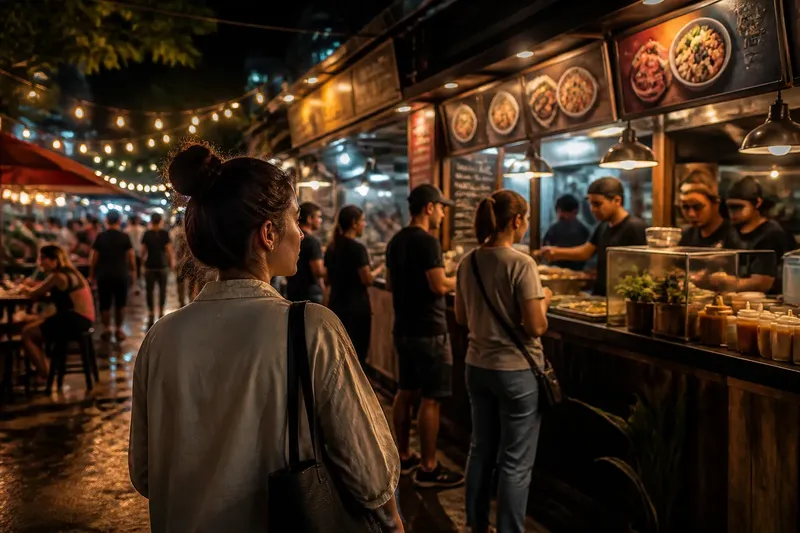
The common mistake on a first visit to a street food row is joining the first short line before noticing how the place works. That can leave you holding a dish with nowhere comfortable to eat, or ordering something that does not suit your appetite. A little observation first makes the stop easier without turning it into a project.
A street food row is a stretch of stalls or carts where several vendors serve food within a shared public area. It might occupy a plaza, a market lane, a transit-side walkway, or a cluster of tables beside a busy street. Treat your first pass like opening a neighborhood map: look for useful landmarks before choosing a route.
Walk the row once before deciding
Start at one end and move at an unhurried pace. Notice where queues form, where people collect their orders, and whether diners carry food to tables or eat beside the stall. These details tell you more about the stop than a glance at the most colorful menu board.
Watch the space between vendors, too. One stall may have a clear order point while another has a separate pickup counter. A handwritten sign might explain where to stand, or a staff member might call names from the edge of the crowd. When the ordering pattern is unclear, pause outside the line and watch one customer complete the exchange.
Do not treat a long line as a verdict on every other stall. It may reflect a popular dish, a slower cooking method, or simply the fact that more people arrived at once. A shorter queue can make an easier first stop, but the menu and the surrounding seating still matter.
Read the menu for choices you can understand
Look for the dish name, its main ingredients, and any signs of how it is served. A menu may distinguish a filled flatbread from a bowl, or list toppings separately from the base. If the wording is unfamiliar, a picture or a short ingredient note can help you decide without needing to know the whole food tradition in advance.
Notice whether the board offers a small number of preparations or many variations. A compact menu can make ordering simpler; a longer one may give you room to adjust a dish. Neither format tells you whether the food will suit you. Read what is actually written and ask one specific question if a detail affects your choice.
For example, say you are choosing between a bean-filled arepa and a grilled corn cup, and you want something easy to carry. You could first check whether the arepa is served wrapped and whether the corn cup comes with a spoon; then choose the option that fits how you plan to eat. That small check can be more useful than trying to predict which dish will be the “best.”
Use the vendor’s rhythm as a guide
Each stall has its own working pattern. One vendor may take orders at a register and call a number when food is ready. Another may build each portion while speaking directly with the customer. Notice the sequence before stepping forward so you do not block a pickup area or interrupt someone handling an order.
When you reach the ordering point, have a simple choice ready and give the vendor room to answer. If you need clarification, ask about one practical detail at a time: what comes with the dish, whether a topping is already included, or where finished orders are collected. A clear question is easier to answer than a request to explain the entire menu.
Pay attention to how the vendor communicates with the people ahead of you. Some exchanges are quick; others include a brief recommendation or a question about spice. Match the pace rather than assuming a stall is unfriendly because the line is moving briskly. The goal is a comfortable exchange, not a perfect performance in local food vocabulary.
Find a place to eat before carrying your order
Shared seating changes the practical side of a street food stop. Tables may be scattered among the stalls, set along one edge, or shared by people who bought from different vendors. Before ordering, look for a seat that is open and appropriate to use, especially if you are carrying a tray or a dish that needs both hands.
Some rows have no dedicated seating. Diners may stand at counters, lean against a ledge, or take food to a nearby public bench. Notice what others are doing and whether signs or staff instructions indicate where eating is welcome. A quick look can prevent the awkward shuffle of balancing food while searching for a place.
Think of a shared table like a library table with a little more conversation: it is communal space, not a reserved extension of one stall. Keep bags close, leave room for someone else, and clear your tray or wrappers when you finish if bins are provided. If the tables are full, wait without hovering over a diner who is still eating.
Make a first order that leaves room to adjust
Your first choice does not need to represent the whole row. Pick a dish that sounds appealing and is manageable to carry, then leave the possibility of another stop open. That approach works especially well when portions, sauces, or serving styles are difficult to judge from a menu.
Consider the conditions you can observe: whether you want a meal or a small bite, whether you can sit down, and whether the dish seems suited to eating on the move. If you are sharing food, agree on what each person wants before reaching the counter. A divided order can let everyone sample a different stall, but only if the group can coordinate pickup and seating without crowding the line.
Do not feel obliged to order a dish merely because others are ordering it. A vendor’s specialty can be a useful starting point, but your appetite and preferences still count. If you want to try something unfamiliar, choose a preparation whose ingredients or serving style you can identify well enough to make an informed decision.
What should you notice on a first visit?
How do I tell where the line begins?
Look for the person currently ordering and the space behind them, then check for a sign or marked queue. If customers are clustering without a clear order, wait to the side until the vendor or the next customer indicates where to join.
What if I cannot pronounce a dish name?
Point to the menu item or describe its position on the board, then ask a concise question about its ingredients or serving style. You do not need to imitate a pronunciation you are unsure of to place an order politely.
Should I order before I find a seat?
If seating looks scarce or the dish needs a table, check for an open place before joining the queue. When seats are plentiful or the food is easy to carry, ordering first may be simpler; follow any instructions posted at the stalls.
How can I try a dish without overordering?
Ask whether the vendor offers a smaller portion or whether the dish is usually shared, if the menu does not make that clear. You can also start with one item and decide about another after you have eaten it.
Notice the small signals that make a place legible
After ordering, observe how the row handles the interval before food arrives. A buzzer, ticket, shouted name, or hand gesture may be the cue to collect a dish. Keep an eye on your own order without standing in the path of customers who are still deciding or vendors who are carrying food.
Look for practical signs of care in the shared area: a place to discard napkins, a surface for returning trays, or a clear route between tables and stalls. These are not a scorecard for judging a neighborhood. They simply help you understand how people are expected to use the space and what will make your visit smoother.
If you visit with someone else, compare what each of you noticed after eating rather than trying to review the entire row. One person may have spotted a vendor’s order routine; another may have noticed a seating corner that stays quieter. Those observations can shape a more relaxed return visit, when the layout already feels familiar.
Leave the row as easy to use as you found it
Before leaving, check that you have your belongings and that your table or standing spot is clear. Put waste where the row provides for it, and return a tray if that is the local routine. If a vendor gave a helpful answer, a brief thank-you is enough; there is no need to prolong the line when other customers are waiting.
A first visit to a street food row is most useful when it gives you a feel for the place, not a list of dishes you were supposed to try. The next time you pass through, you may recognize the ordering cues, know where to sit, and feel ready to choose something new. Start with the stall that fits your appetite and the space you have, then let the rest of the row remain an invitation rather than an assignment.